From natural disasters to economic crises, being financially ready is crucial. In this article, we will explore the importance of getting your finances in order and provide you with practical tips on how to do so.
Get Your Finances in Order Early
 Many people, when considering their survival needs, focus primarily on food, water, shelter, first aid and other immediate needs that reflect an emergency. They might remember to take out a little cash in case the power goes down and they need to go to the store for something, but that’s usually the extent of their planning.
But finances are actually one of the biggest areas of concern you need to be focused on. It can play a big role in whether or not you have what you need and how well you get through a survival event to full recovery.
There are many different ways you should be getting your finances in order to ensure you’re not being impacted in a negative way. Being unprepared for a financial strain can leave you emotionally drained, frantic and even physically ill from the stress.
Instead of letting it take a toll on you, try to get your money situation stabilized so that no matter what happens tomorrow or further down the road, you and your family can get through it with ease.
Survival Events and Their Financial Impact
It’s not just an economic disaster that could impact you financially, although that is a major concern many have. Inflation, a stock market crash or any job loss or downturn can devastate you if you aren’t ready for it.
Sometimes, events like this may only constitute a survival situation for you personally (like a job loss) but it requires the same amount of preparation and planning.
In a situation like a pandemic, when millions of people saw their jobs shut down, it was on a wide-scale basis, but it still affects each person individually.
Cyber attacks on financial institutions might occur, wiping out your savings and causing you to be unable to immediately get food or other necessities unless you have plenty of cash on hand.
Natural disasters like a wildfire, earthquake, hurricane, tornado or flood can wreak havoc on your finances. Not only do you need money in that moment for evacuation measures, but you may need funds to support you afterward while insurance claims are being processed.
In this and other survival events, like the threat of civil unrest or even war, you may need supplies to protect yourself and your family. You may need to quickly buy things to board up windows, too.
We mentioned the pandemic in terms of job loss, but when something like this happens, you might not lose your job, but become ill, and this can result in thousands of dollars worth of medical bills or hospitalization charges.
Even simple increases in mortgages, interest fees, insurance and other day to day living expenses can eventually bring about an emergency financial situation for many individuals.
Start Saving for an Emergency Fund
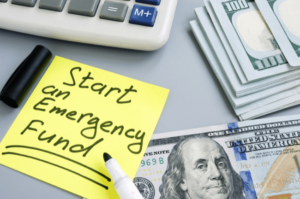 If something happened in the next hour, would you have the money you need to weather the storm? Most wouldn’t. But that doesn’t mean you can’t start saving up for an emergency right this second.
Before you turn your attention to debt or other survival investments, you want to have a savings built up to help you through personal, national or global emergencies. The amount you need may vary, depending on what the event is.
A short-term event where the grid goes down due to a tornado might be fixed within 24 hours to a few days. But if it’s something more precarious, you’ll need more money to tide you over.
You don’t want to blindly pick a number and save up to that amount. Instead, calculate all of your monthly costs – from the mortgage, car payments and utilities to food, clothing, pet care and more.
Most preppers start with an initial goal to have at least three months’ worth of expenses covered. If you need $5,000 a month, then you’d want to set your sights on a $15,000 emergency fund. But don’t put it all in one place!
You want to diversify your savings while making sure the money is easy to get to. It’s okay to have a traditional savings account, but you may want an account that earns higher interest – plus, cash in a hidden lockbox or safe (both fireproof and waterproof) at home to cover you for a few weeks, too.
Paying Off Debt and Building Your Credit
If you’re currently drowning in debt, then getting that paid off is your next step. You don’t want to be under any financial pressure and have bill collectors harassing you simultaneously.
While the debt snowball method (where you pay off the smallest debt first and apply that payment to the next one) may make you feel good, from a prepper point of view, it’s not the wisest move.
You need to pay off the one with the highest interest first (using the avalanche method) – otherwise you’re wasting money that could be put toward other things like supplies, a homestead, or an emergency fund.
Don’t be afraid to consolidate debt or open up negotiations with lenders to whittle down your debt faster. They would rather you contact them and work something out than see you default on your loan completely.
As your debt decreases, your credit score will begin to rise. Check out your official credit scores and see where you stand, making sure to take corrective measures for any erroneous information on them.
Financial Strategies for Survival
 As your money situation begins to get ironed out, you want to be more strategic with your finances. Figure out what portion of your earnings you want to spend on survival supplies each month, and prioritize what it gets spent on.
Part of your survival expenditures might be going towards a homestead property. If possible, you’ll want to pay for that in cash, or at least pay off the property loan quickly. You’ll need money for the land, building supplies and any other construction you want on the property.
Many preppers take care to invest in non-cash currency, like silver and gold bars. These precious metals have a pattern of stability. You do have to have somewhere safe to store them, and know how to properly trade them in when the time comes.
Other Additional Options for Survival
Other financial preparations you make don’t give you money up front, but only in the event of a disaster. Homeowner’s insurance, car insurance, health and life insurance all pay off when and if you’re facing a crisis.
Currency doesn’t always come in the form of insurance, cash or investments. Sometimes, it’s in the form of goods you can trade in a survival event. These may not be necessities, but luxury items like chocolate, alcohol, gas or other items.
Even skills you possess can be used as a currency of sorts. If you know how to repair machinery, know carpentry or other skills like first aid, you might be able to trade those for things you need during a survival event without any money changing hands.
Being financially stable isn’t just a measure to take for survival situations. It delivers peace and serenity during normal times in your life, too. When others are struggling and you know you can make ends meet, you’ll feel good knowing you have you and your family’s needs met for everything.
How to Prepare for Financial Crisis
Conclusion: Taking Control of Your Finances
Having our finances in order is an essential step in preparing for survival events.
By establishing a budget, reducing debt, and building an emergency fund, we can ensure that we are financially equipped to handle any unexpected situations that may arise.
It’s important to remember that being prepared doesn’t mean being fearful, but rather being proactive and responsible.
So let’s take control of our financial well-being today and start prepping for a more secure future. Your peace of mind is worth it!